The 100 Day Project
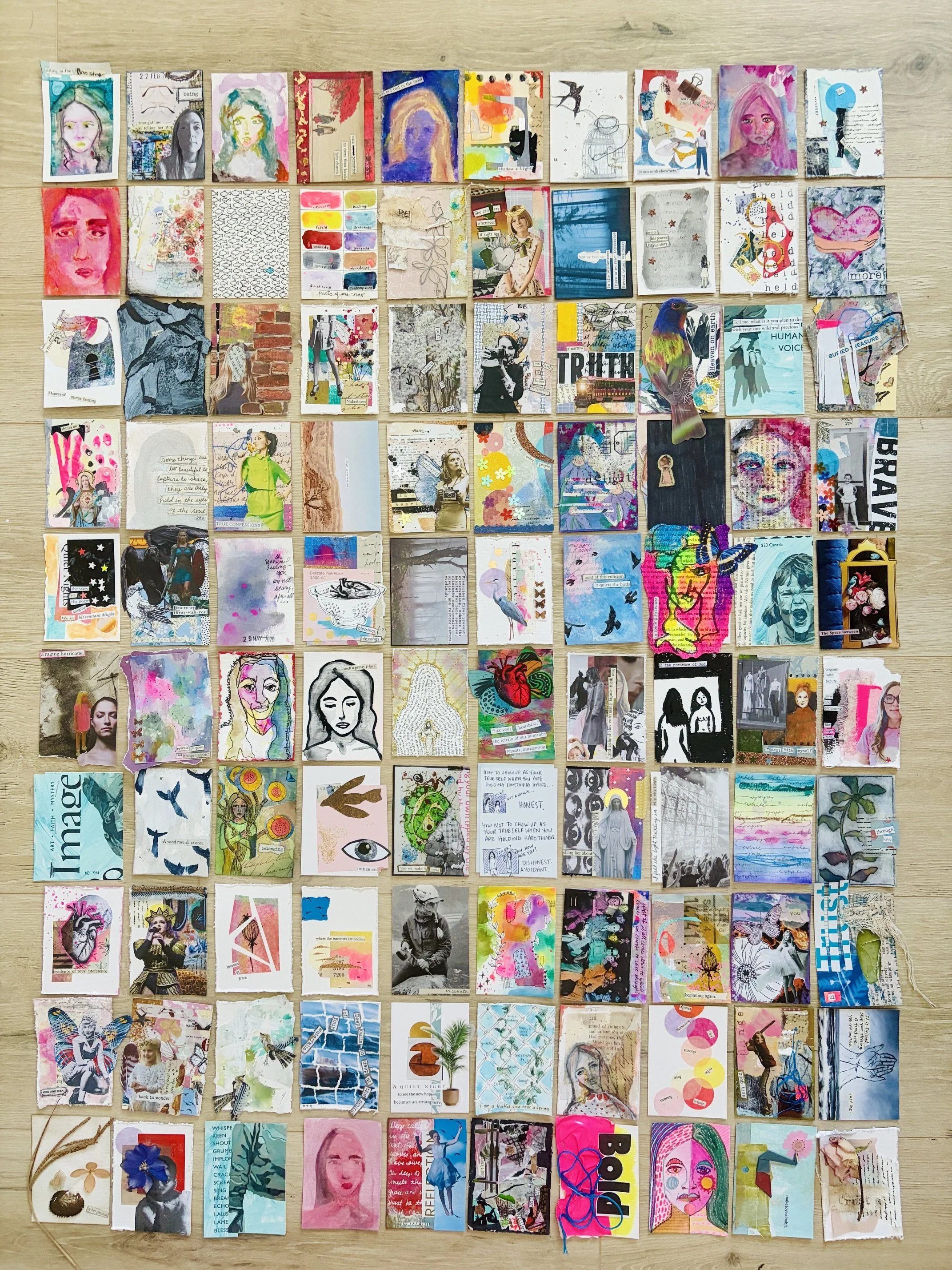
Every year Lindsey Jean Thomson hosts The 100 Day Project, inviting creatives worldwide to practice art for 100 days and share their work online. I’ve completed the project twice (and begun it other years), and those full runs have been truly transformative, opening new possibilities, offering healing, and expanding how I share and connect.
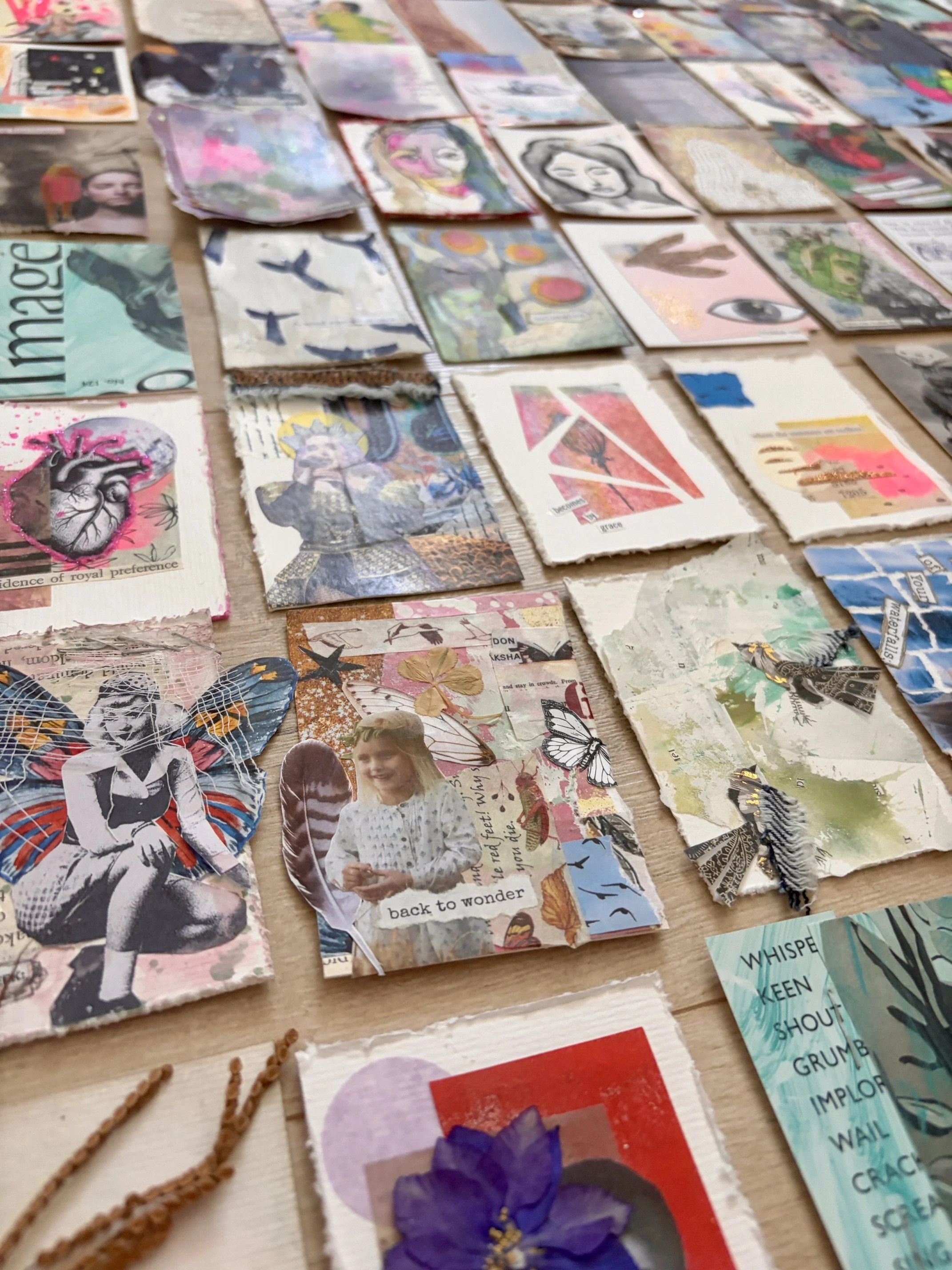
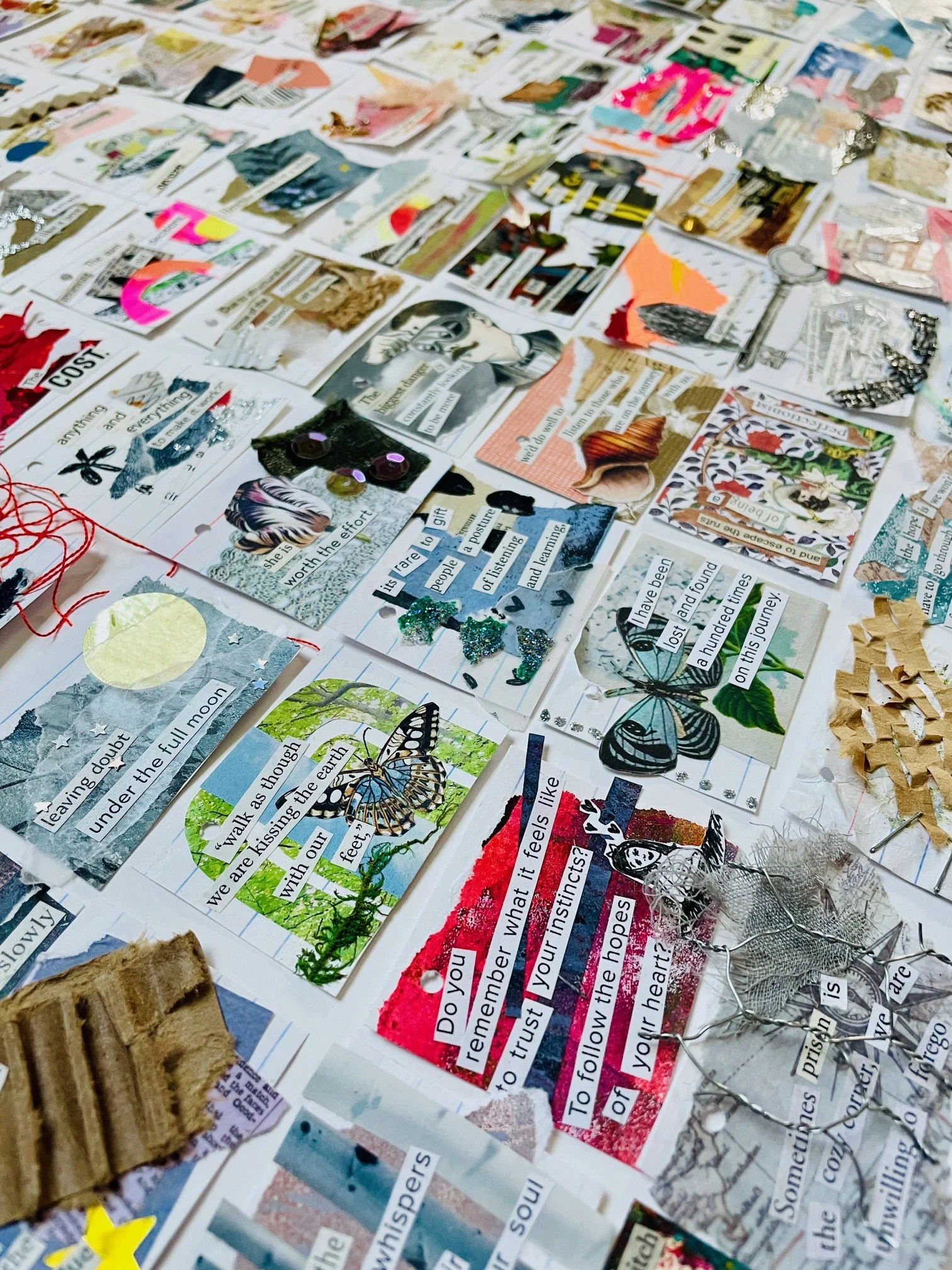
I chose intuitive-art-making both times: mini mixed-media collages in 2024 and artist-trading-card–sized pieces in 2026. The revelations I had during daily intuitive practice led me to pursue certification in therapeutic arts, which I now bring into client work. I hold the belief: if our body keeps the score, our art doesn’t have to, and I use that principle to support the somatic benefits of creating.
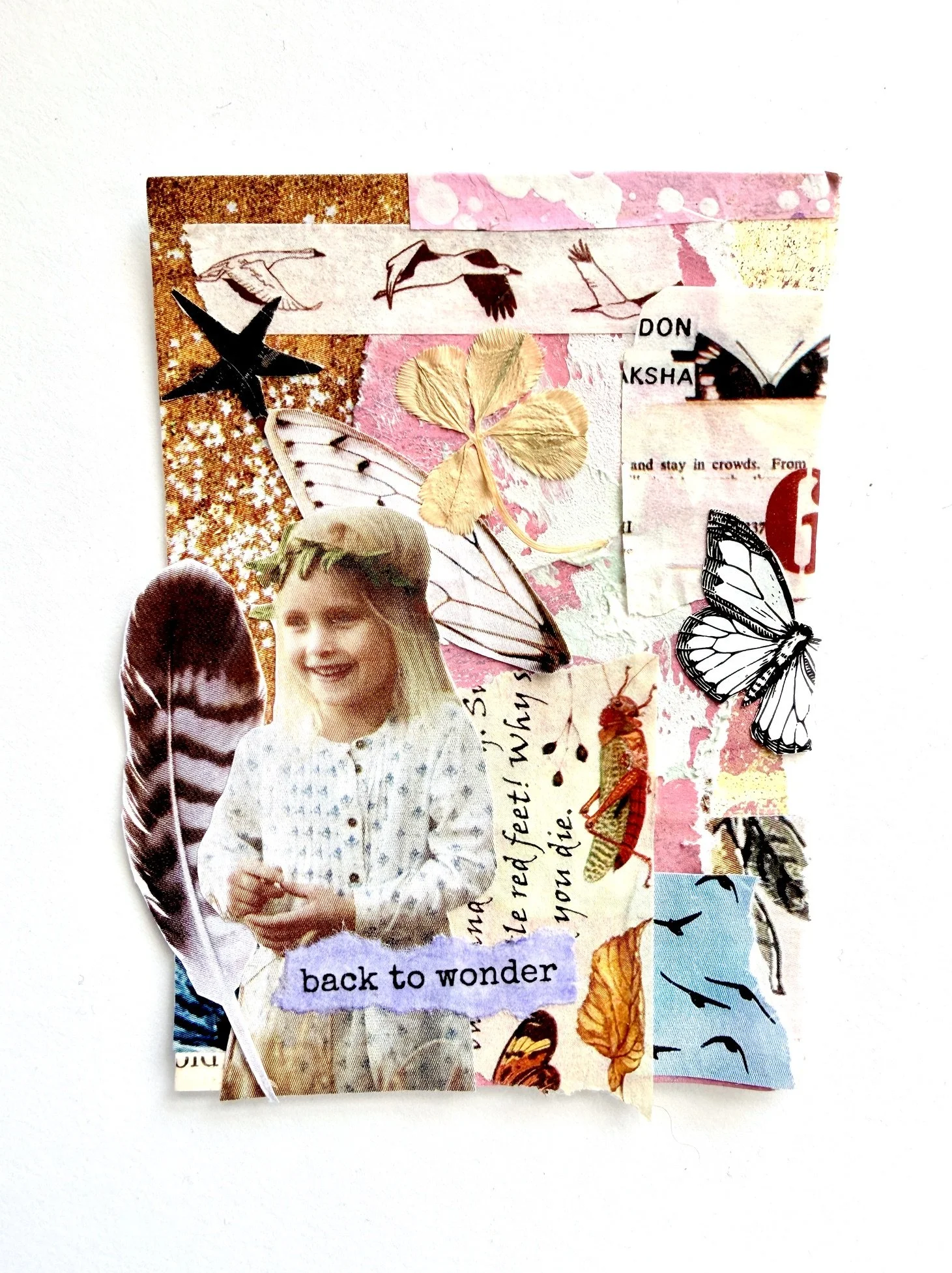
The artist trading cards that I completed in 2026 were all created with the theme: ‘100 Days of True Self in Christ Exploratory Art, an Intuitive Journey’ and I am currently working on publishing them to offer the insight gained through this process to others, God willing. Thus, this project is shaping and defining my vocational offerings and helping me refine how I best want to help others.
Therapeutic Benefits of 100 Days of Creating Intuitive Art
Now that I’ve had the opportunity to fully complete two rounds of the 100 Day Project with intuitive art making, I can confidently share that there are many therapeutic benefits. I’ll share a few:
Intuitive art allows you to access the subconscious, bypassing the logic mind, allowing deep-seated emotions or somatic trauma to surface without restriction of language
Choosing and layering imagery can communicate complex feelings that may be too hard or painful to articulate in traditional talk therapy
Using external images and objects creates a safe container, providing healthy distance to process intense experiences without feeling overwhelmed
The physical act of cutting, ripping, searching, gluing, marking, and painting engages your tactile senses, keeping your mind anchored in the present moment
Using found images, words/phrases, and everyday objects removes the paralysis of staring at a blank canvas
Ripping papers and assembling collages mirrors how the mind can break apart large, chaotic worries and rebuild them into a manageable structure
In a similar way, having the freedom to assign a color, shape, or marking to a heavy emotion allows the emotion to lose some of its weight by giving it form. It moves the emotion from inside the body to a tangible object or work of art, thus lessening the fear surrounding the emotion
Placing contrasting elements side by side, like combining dark and light images, soft and heavy textures, etc., helps integrate conflicting internal feelings
Combining visual images with written text effectively bridges the intuitive right brain with the structural, logical left brain
Juxtaposing words over abstract mixed media acts as a form of self-witnessing, allowing you to rewrite your inner narrative on your own terms
Creating daily acts as a form of exposure therapy, breaking the paralysis of perfectionism and making a blank canvas feel approachable
Creating on bad days teaches self-acceptance, proving that flawed or ugly work is safe, normal, and part of being human
Completing a small work of art helps with feeling a sense of accomplishment, which boosts mood, creativity, and overall mental health
Creating consistently in this way gives your brain a repeated, structured action which helps to calm your nervous system
Intuitive art making requires no talent, has no rules to follow, and invites curiosity and play, which is fun and also, good for your mental health
Tips For Beginning Intuitive Art Making
I go into great detail sharing tips for making intuitive art in some of my workshops and courses, but here are a few that stand out if you are itching to get started right away:
Work in a small format. Consider working with “inchies” (usually 1.5 in x 1.5 in cut from index cards or other cardstock), artist trading cards, or index cards
Before beginning, gather all of your supplies, including your “treasure box” (see next bullet), glue stick, scissors, stapler, additional art media such as pens, markers, paint sticks, etc.
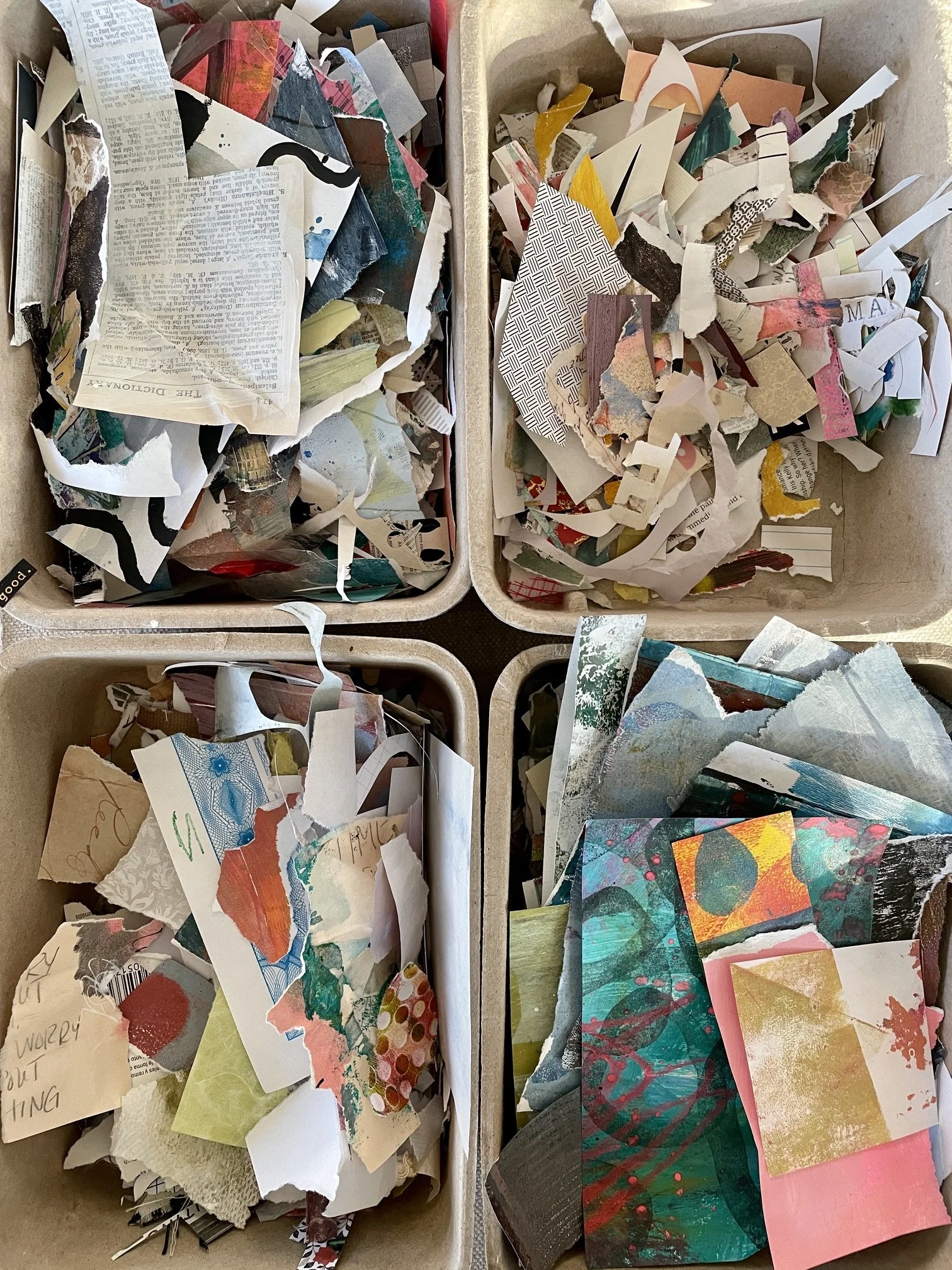
Create a “treasure box” of gathered and found words from old books and magazines, images from magazines, textured scraps, washi tapes, and other interesting paper or fodder (see below) so you can simply grab whatever speaks to you during the creative process
You may enjoy beginning with a creativity ritual - a prayer inviting the Holy Spirit to co-labor with you, lighting a candle, starting some inspirational music (I loved changing up the vibe each day), or by taking a few deep belly breaths before beginning
Begin with an inspirational thought or prayer. I would normally create after I completed my daily Bible reading plan or devotions, or after I prayed. My creativity would then be fueled by my thoughts, questions, wrestling, and ideas. Often, I could feel the Holy Spirit guiding me through the creative process as I allowed my hands to grab, rip, glue, and flow
If you find that you’re thinking too much, try setting a timer and creating within the time limit. This ‘gentle’ pressure helps get the thinking mind out of the way so the feeling mind can go to work
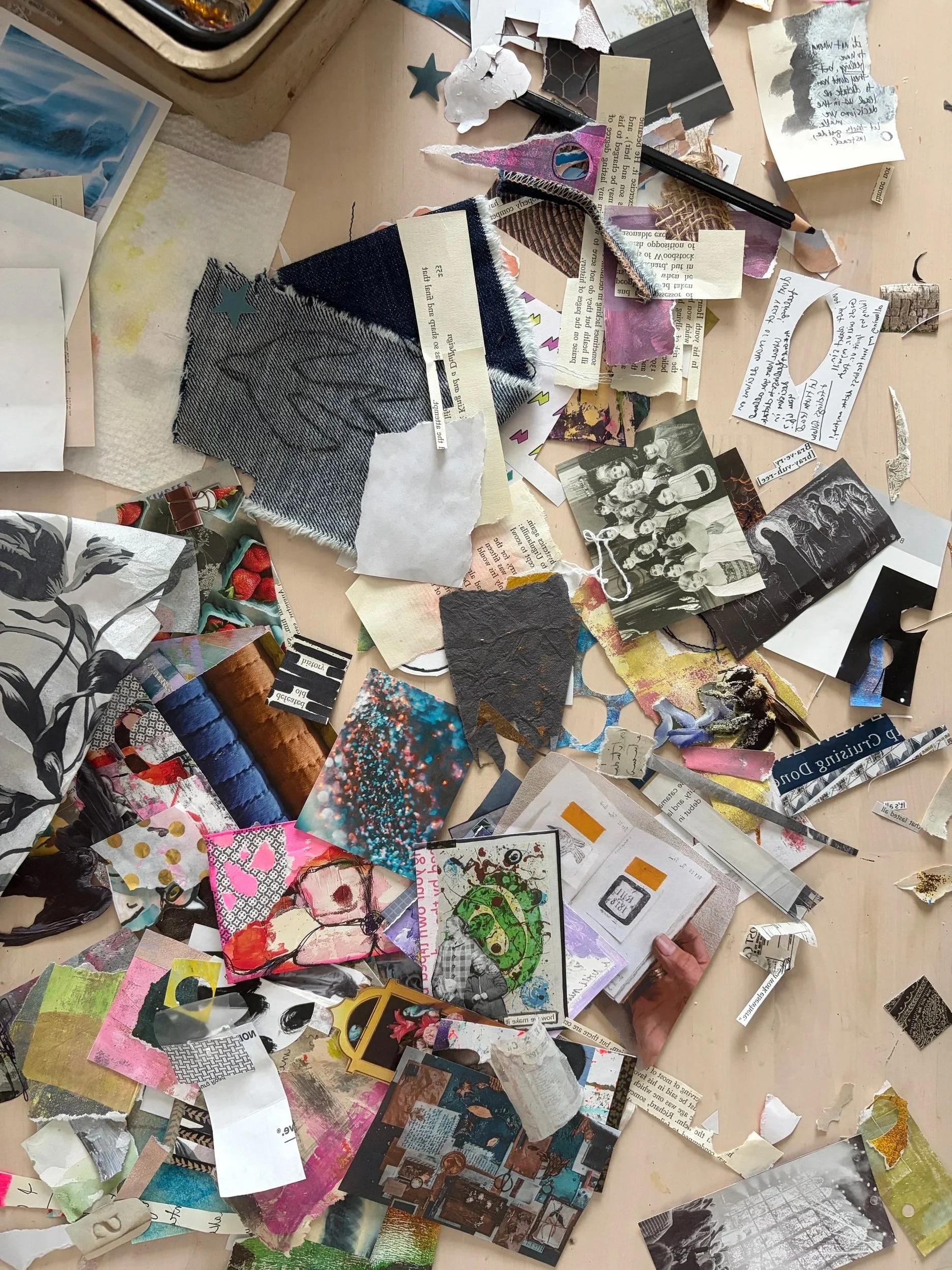
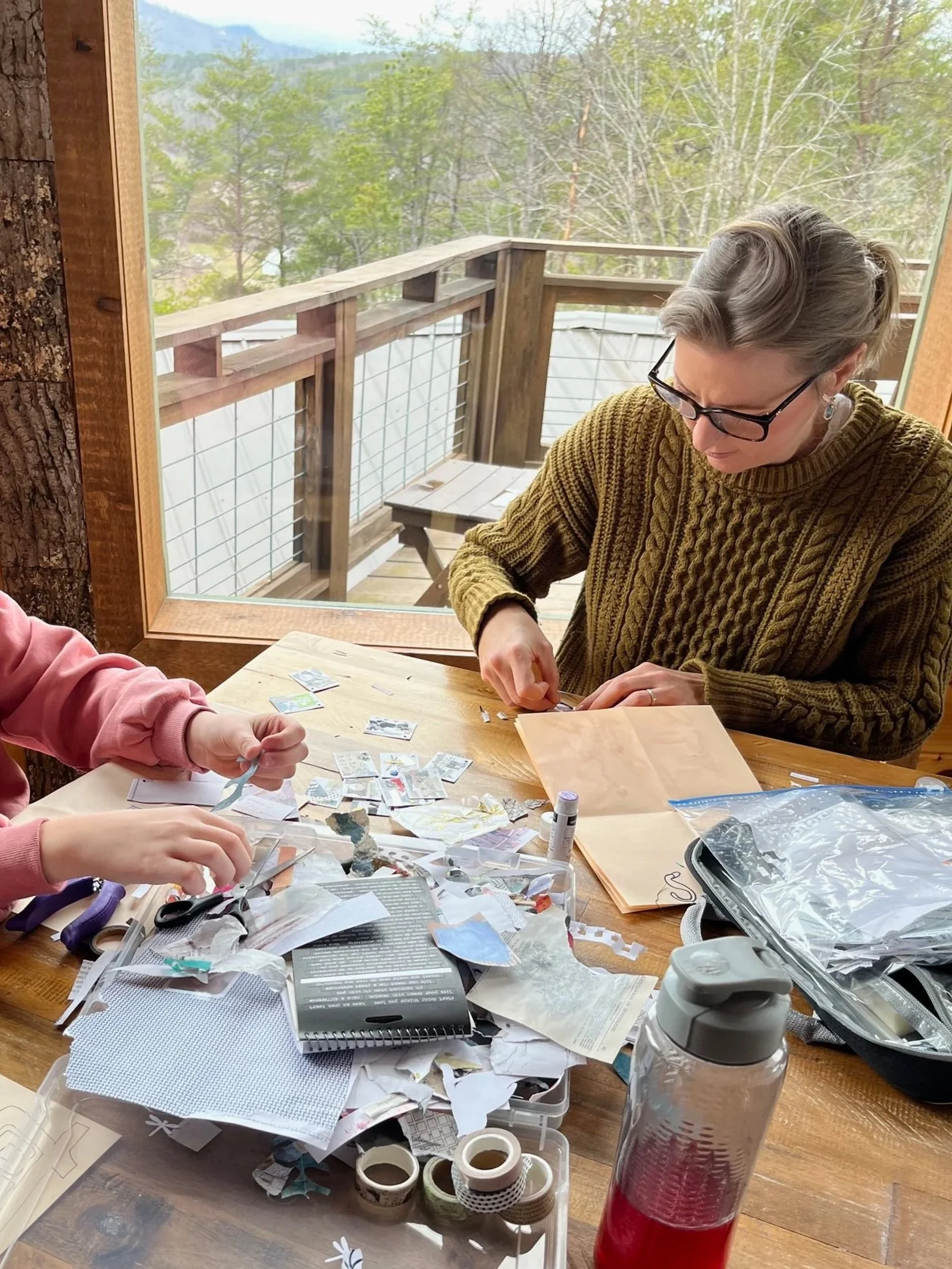
Mess is best! Seriously. My workspace would likely be considered a nightmare to many, but I loved having everything out in front of me, giving me a feast to choose from, as I considered what images and objects stood out the most
Try not to analyze what you’re creating when you’re creating. If you want to try to do that, wait until you’ve completely finished creating
Photograph your completed images on a solid background every single day so the images will appear more uniform when you have completed your project. I prefer a solid white background
Once you’ve completed your art, sit with it for a while, even if it’s uncomfortable. Ask God to reveal to you the message that lies within it. I found that some days, I had no idea why I had created what I did. But looking back, when I took the time to sit with the card, pray, listen, and be still, I often heard what I needed to hear
Fun Finding Fodder
Before you begin, you’ll want to spend some time creating your treasure box of fodder. Fodder refers to the raw materials, papers, textures, and handmade elements that artists collect or create to use later in their projects. Gathering your fodder is so much fun and once you start, it’s hard to stop. I have way more security envelopes than I care for anyone to know. Here are some fodder ideas to get you started:
As I mentioned, security envelopes from mail have the coolest insides
Stamps from used mail
Grocery store netted produce bags
Tea bag accouterments and string
“Fussy cut” (cut right outside the edges of) sketches or doodles
Stickers
Any kinds of tape like washi, duct, drywall, or masking
Large words, phrases, fonts that catch your eye from magazines, mail, and any paper
Receipts, tickets, wristbands…anything personal that will help you remember something specific
Copies of book pages or old books from shops or yard sales
Illustrations from magazines
Wrappers, foils on candies, doilies from cafes, pretty napkins, anything you see while out and about
Small poems or printed and cut-out phrases, passages of scripture, or quotes
Other artist’s art! This is a huge area of inspiration to me
Photos you take; photos of color palettes you love; photos of beauty you don’t want to forget
Any papers with interest, such as gift wrap, tissue paper, old calendar pages, vintage documents, dot journal pages, used (written on) journal pages, yellow legal pad, post-it notes with a note on it, lined and graphed paper, craft paper or cut up paper bags, paper with barcodes or graphs, even deli paper or butcher paper with prints can be fun!
Paper with interesting writing on it (you can make this)
Textured items such as yarn, string, pieces of fabric, felt, ribbon, denim, wire, burlap
Inside lining of Amazon envelopes or the ripple lining in cardboard
Old Post It notes you no longer need as reminders